
White Rice, Our Guide to the Cooking Methods
How to cook white rice well: the right varieties, times and quantities that work, from our supply chain in Lumellogno.
Acqua e Sole white rice is cooked with three methods: oven pilaf (absorption, ratio 1 to 1.5, 18 minutes at 180 degrees), English-style boiled rice (ratio 1 to 10, drained), risotto (traditional mantecatura, the off-heat creamy stir). Two varieties from our supply chain cover every use: Arborio (16 minutes, pilaf and salads) and Carnaroli Classico (18 minutes, risottos). Closed supply chain, ISO 9001 certification, grown in Lumellogno on the Novara plain.
Cooking white rice well
Cooking white rice is the simplest thing in Italian cuisine, and also the most botched. Here on the Novara plain we grow the rice ourselves, we dry it and we pack it, from seed to grain, and we know well that the difference between a grain that comes out right and a mushy one comes down to three things: the right variety for the dish, the ratio between water and rice, and respect for the cooking time of the variety you have in your hands.
White rice is not a single dish, it is a family of preparations. The pilaf for a side, dry and loose, is made in the oven. English-style rice, boiled in a large pot and drained, is the base for salads. Risotto proper is yet another thing, it has its own rules, and for those after our risottos we point you to our Paniscia Novarese. For pilaf and for salads we recommend Arborio, sixteen minutes of soft cooking without turning to mush. For risottos, Carnaroli Classico, eighteen minutes, superior al dente hold, the rice that in Novara has always been called the king. Two different characters from the same closed supply chain.
“At home we say that rice wants three things: the right water, a lively flame and a light hand. It holds for pilaf, for boiled rice, for risotto. The variety changes the dish, but these three rules are always the same.”
From the kitchen of Acqua e Sole, Lumellogno
Arborio vs Carnaroli, two varieties compared
Arborio
The grain for salads, for pilaf and for rice pudding.
Buy ›Carnaroli Classico
The king of risottos, the superior al dente hold.
Buy ›An honest note: for real sushi you would need a specific Japanese rice. But if you make home-made sushi for a Saturday night, the Carnaroli with a splash of rice vinegar and sugar holds the roll and does not stick. It is not orthodox, but it works.
The 3 cooking methods for white rice
Three different ways to cook white rice, for three different results. You choose them based on the dish, not on preference.
Oven pilaf
Dry, loose rice, every grain separate. Cooked in the oven by absorption.
See method › Method 2English-style boiled
Boiled in a large pot and drained, the base for summer cold salads.
See method › Method 3Creamy risotto
Tostatura, the dry-toast of the rice, boiling broth two ladles at a time, mantecatura all’onda with butter and Parmesan.
See method ›Method 1. Pilaf rice, cooking by absorption
Pilaf is the classic white rice of Italian home cooking: dry, loose, every grain separate. It is made in the oven, and it is the method we teach to anyone who has never cooked rice.
Quantities to serve 4
- 320 gArborio Acqua e Sole rice
- 480 mlboiling water (ratio 1 to 1.5)
- 6 gfine salt, a level teaspoon
- 20 gbutter, or 2 tablespoons of extra virgin olive oil
- to tastebay leaf or cinnamon stick, optional
Preheat the oven
We heat the oven to 180 °C, conventional. We keep the already salted water ready in a separate small pan, ready to bring to the boil when needed.
Toast the rice
In an ovenproof pan with a lid, we melt the butter over medium heat. We add the rice and toast it for two minutes, stirring, until the grains are glossy and warm to the touch.
Add salted boiling water
We pour in the already salted boiling water all at once. We stir just once, only to spread the grains.
Cooking in the covered oven
We cover with the lid and put it in the oven for 18 minutes without opening it again. The steam has to stay shut inside the pan, that is what cooks the rice.
Resting and serving
We take it out and let it rest, covered, for five minutes. We fluff it with a fork and serve. It keeps in the fridge, covered, for up to 24 hours and reheats well in a pan with a tablespoon of water.
The right result. Dry rice, loose, every grain separate and glossy. A base for braised meats, baked fish, curry, stews with sauce.
Method 2. English-style boiled rice, boiled and drained
English-style rice is the rice for cold salads, for summer one-dish meals, for light cooking. It is boiled in a large pot with plenty of water and drained. Nothing more, nothing less.
Quantities to serve 4
- 320 gArborio Acqua e Sole rice, or Carnaroli if you prefer it more al dente
- 3 Lplenty of water (ratio 1 to 10)
- 30 gcoarse salt, 10 g per litre as for pasta
Bring the water to the boil
In a large pot, we bring the 3 litres of water to a brisk boil. We leave room: the rice has to be able to move freely as it cooks.
Salt, then add the rice
We salt the boiling water and wait for it to return to the boil. We pour in the rice in a steady stream and stir once. We let it cook over a brisk heat, without a lid.
Cook to the time of the variety
16 minutes for Arborio, 18 for Carnaroli Classico. We taste a grain a minute before the end: it should be soft on the outside and with a slight resistance at the heart.
Drain and cool
We drain in a fine-mesh colander. If the rice is going into a cold salad, we pass it straight away under cold running water to stop the cooking, then dress it with a drizzle of extra virgin olive oil so it does not stick.
The right result. Al dente grain, loose, slightly glossy if dressed cold with oil. A base for summer rice salads, cold rice with tuna and vegetables, cold buffet dishes.
Method 3. Risotto, the mantecatura
Risotto is another thing entirely: it is not white rice as a side, it is a dish in its own right. The rice is dry-toasted in the soffritto, the slow-sweat aromatic base, deglazed with wine, moistened with boiling broth two ladles at a time, then finished off the heat with the mantecatura, the off-heat creamy stir of butter and Parmesan. For the full traditional recipe we point you to our Paniscia Novarese, which is the risotto of our city. For risottos in general the rule is only one: Carnaroli Classico, always, because it holds the grain and withstands the mantecatura.
The right result. Risotto all’onda, the wave: a dish that flows slightly when you tilt it, with well-defined al dente grains held by a golden cream of starch, butter and Parmesan.
The 5 most common mistakes when cooking white rice
-
Washing the rice meant for risotto
Risotto lives on the surface starch: if you wash the rice before toasting it, you wash away the future creaminess. Never wash rice for risotto. For pilaf, on the other hand, washing is optional, and for salads some do it for looser grains.
-
Using cold water in absorption cooking
Cold water means thermal shock to the grain, uneven cooking, the risk of a raw centre. The water for pilaf goes in already boiling, always. The same goes for the risotto broth: boiling, never lukewarm.
-
Opening the lid during pilaf cooking
Pilaf cooks in trapped steam. Every opening of the lid lets steam escape and lowers the internal temperature. Lid closed for the whole eighteen minutes, trust the timer.
-
Salting boiled rice too early
The salt goes into the water when it boils, before adding the rice. Salting with the rice already in means salt that does not dissolve and sticks to the grain. For risotto the opposite holds: the salt is adjusted at the end of cooking, because broth, Parmesan and ingredients may already have salted it.
-
Choosing the wrong variety
Putting Carnaroli in cold salads is a waste: cold, the grain turns hard and loses its quality. Putting Arborio in a Barolo risotto is a different choice, not a wrong one, but the result is softer, less structured. The variety is not a detail, it is the dish.
Why our rice cooks differently
One thing we do here at home that changes the cooking result a great deal: we dry the rice at low temperature in the drying barn at Lumellogno, with solar heat and slow ventilation. Most industrial rice is dried at high temperatures to go fast, and that creates micro-cracks on the grain which, in cooking, let the starch escape in a disorderly way. Our rice leaves our farm intact: the grains are compact, the surface starch is where it should be, and in cooking it behaves as it should. That is why the AS Arborio pilaf stays loose without sticking, and the AS Carnaroli risotto releases creaminess without needing anything special. Same supply chain, same plain, two different characters of the grain. No tricks, no additives, just a drying done with patience.
From the kitchen of Acqua e Sole, Lumellogno
Frequently asked questions
How much salt do you need to cook rice?
Can I wash the rice before cooking?
What is the difference between Carnaroli and Arborio?
How many grams of rice per person?
How long to cook white rice?
What is the best rice for cold salads?
What is the best rice for a side dish?
How to store cooked rice?
Two varieties, one single supply chain
This guide points you to two varieties from our closed supply chain in Lumellogno: Arborio for pilaf, salads and side dishes, Carnaroli Classico for traditional risottos. Same soil, same care, two different characters of the grain.
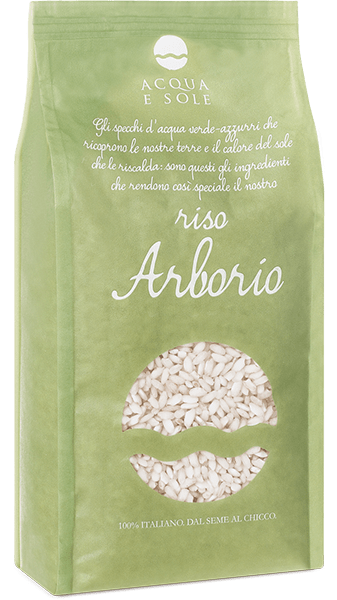
Arborio Rice
Large grain, generous surface starch, soft cooking in sixteen minutes. The variety for pilaf, cold salads, rice pudding. Grown and packed in Lumellogno.
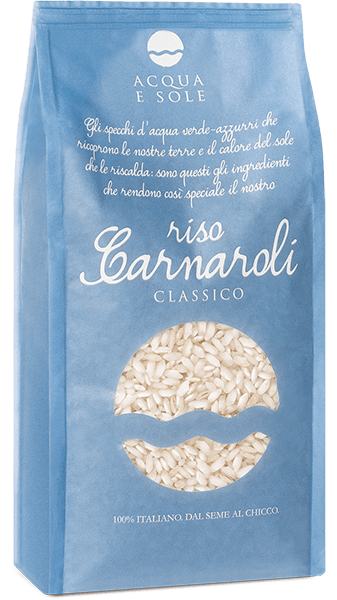
Carnaroli Classico Rice
Structured grain, al dente hold for eighteen minutes, tidy mantecatura. The variety for the traditional risottos of the Novara plain and of all Italy. Closed supply chain, ISO 9001 certification.
More recipes with white rice
From traditional risotto to pilaf, to cold salads: six recipes from our recipe book that put the methods of the guide into practice.
Wholegrain rice, our guide
Carnaroli Classico Wholegrain, Il Moro and Il Cardinale: soaking times, cooking and why they stay firm. The guide to our wholegrain rices.
See the guidePaniscia Novarese
The risotto of our city: black-eyed beans, salam d’la duja, pork rind, creamed Carnaroli. The home recipe.
See recipeArborio Pilaf with Seasonal Vegetables
Absorption cooking in the oven, the universal side. Arborio loose and neutral for any main.
See recipeRisotto alla Milanese
Saffron in threads, beef marrow, mantecatura all’onda. The risotto of the Lombard tradition in our version.
See recipeSummer Rice Salad with Vegetables from the Garden
Arborio boiled English-style, cherry tomatoes, mozzarella, basil, extra virgin olive oil. The one-dish meal of the warm months.
See recipePorcini Mushroom Risotto
Carnaroli Classico, fresh porcini or dried and rehydrated, vegetable broth, mantecatura with butter and Parmesan.
See recipeRice Salad with Tuna and Olives
Cooled Arborio, tuna in brine, Taggiasca olives, Pantelleria capers. The home classic revisited.
See recipeGuide written by the Acqua e Sole editorial team, from our experience on the Novara plain.