
Arborio Pilaf with Pumpkin, Porcini and Rosemary
The autumn pilaf of the Novara plain, with roast pumpkin, fresh porcini sautéed quickly, rosemary and a handful of toasted walnuts scattered over the plate.
Our autumn pilaf, cooked covered in the oven: Acqua e Sole Arborio rice toasted in shallot and oil, boiling vegetable stock poured in all at once, covered cooking for 18 minutes at 180 degrees, resting for 5 minutes. It is served over cubes of roast delica pumpkin, fresh porcini sautéed over a high heat, a few needles of fresh rosemary, Parmesan for the mantecatura (the off-heat creamy stir) and chopped toasted walnuts to finish. Vegetarian in the base version, from October to the end of November.
When the pumpkins from the farm ripen and fresh porcini start to appear at the Novara market, our pilaf changes its voice and takes on the colours of autumn. Cooking by absorption in a covered oven, the same technique as the base recipe with seasonal vegetables, and at the end of cooking the rice dresses itself in roast delica pumpkin, porcini sautéed over a high heat, fresh rosemary and a handful of toasted walnuts broken up with a knife.
Our Acqua e Sole Arborio rice holds up well to the cold season: a large grain, soft cooking, a generous surface starch that binds the dish without making it sticky. For the stock we suggest adding a Parmesan rind, brushed clean, in the last ten minutes of boiling: it gives an autumnal depth without weighing things down. The three components, the pilaf rice, the roast pumpkin and the sautéed porcini, are cooked separately and meet at the table at the moment of serving.
Ingredients for 4 People
Ingredients
- 320 g Acqua e Sole Arborio rice
- 640 ml boiling vegetable stock (with a Parmesan rind in the last 10 min)
- 1 large shallot (about 60 g)
- 400 g delica or butternut pumpkin, already cleaned
- 200 g fresh porcini mushrooms (or small button mushrooms, 250 g)
- 1 sprig fresh rosemary + a few needles to finish
- 1 clove garlic, unpeeled
- 3 tablespoons extra virgin olive oil (2 for the pumpkin, 1 for the mushrooms)
- 3 tablespoons extra virgin olive oil for the pilaf
- 20 g butter (for the final mantecatura)
- 30 g grated Parmigiano Reggiano (optional, for the mantecatura)
- 6-8 shelled walnut halves (toasted and coarsely chopped to finish)
- 1 bay leaf
- to taste fine salt, black pepper
Notes from Home
- Pumpkin in the oven on its own, never with the rice while it cooks: cooked together it releases water and crushes the pilaf
- Porcini cleaned with a damp cloth, never under running water, sautéed over a high heat without covering, salted only at the end of cooking
- Stock enriched with a Parmesan rind, brushed clean, in the last 10 minutes: a plains trick that gives depth without weighing things down
- Lid kept on for the whole 18 minutes in the oven: every opening lets the steam escape and changes the result
- Toasted chopped walnuts only at the very last moment over the plate: they add crunch and a toasted note that speaks to the porcini
Method
Preparing the pumpkin (15 min)
Cut the pumpkin into 1.5 cm cubes. On a baking tray, dress it with two tablespoons of extra virgin olive oil, salt and a few needles of rosemary. Bake at 200 degrees for 15 minutes, until it is soft but holds its shape. Take it out and keep it warm, covered with a sheet of foil.
Preparing the porcini (6 min)
Clean the porcini with a damp cloth, never under running water, or they absorb moisture and fall apart. Cut them into 5 mm slices. In a pan, heat a tablespoon of extra virgin olive oil with the unpeeled garlic, then sauté the mushrooms for 5-6 minutes over a high heat without ever covering them, salting only at the end of cooking. Remove the garlic and set aside.
Preheating and preparing the stock (5 min)
Heat the oven to 180 degrees, conventional setting. Bring the vegetable stock to the boil in a small saucepan, adding a Parmesan rind, brushed clean, in the last ten minutes: it is the trick from home that gives the pilaf an autumnal depth. The softened rind can be saved and eaten separately.
Sweating the shallot (3 min)
Finely chop the shallot. In an ovenproof casserole with a lid (stainless steel or enamelled cast iron), heat the three tablespoons of oil over a medium heat. Add the shallot, season with a little salt and let it soften for three minutes without colouring: it should become translucent, not golden.
Toasting the rice (2 min)
Add the Arborio rice. Toast it for two minutes over a medium heat, stirring with a wooden spoon: the grains should turn glossy, opaque at the centre, warm to the touch. This is the key step of the pilaf: the tostatura (the dry-toast of the rice) seals the surface starch and ensures the grains stay separate.
Adding the boiling stock and baking (1 min + 18 min)
Add the bay leaf. Pour in all the boiling stock at once, there will be a fair amount of sizzling and that is normal. Stir just once to spread the rice evenly over the base. Cover with the lid. Transfer the casserole to the oven and cook for exactly 18 minutes without opening it again: the steam must stay inside.
Resting (5 min)
Take the casserole out of the oven and leave it covered for five minutes: the rice finishes absorbing the residual moisture and settles. Then remove the bay leaf.
Mantecatura (2 min)
Mantecare the pilaf with the 20 g of cold butter in small pieces and, if you like, the 30 g of grated Parmesan (not a strict vegetarian version, since Parmesan contains animal rennet: for a strict vegetarian version, replace it with vegetarian Grana Padano). Fluff with a fork until the butter melts and the dish comes together.
Assembling and serving (2 min)
On the plates, spread the pilaf first, then on top the cubes of roast pumpkin, the sautéed porcini, a grinding of black pepper, a few needles of fresh rosemary and the coarsely chopped toasted walnuts. Serve straight away, piping hot. A drizzle of raw extra virgin olive oil to finish is optional but recommended.
Lumellogno, the pumpkin, the porcini
In our home the autumn pilaf is the dish that opens the season of closed windows. The Arborio comes from the paddy at Lumellogno, we buy the delica pumpkins from the Novara growers who keep them curing under their porticoes, and the fresh porcini are brought in when they go through the Piedmont woods. Three different voices, one plain and two mountains, that meet over a cast iron casserole. The rosemary from our garden acts as the binder, the stock scented by the Parmesan rind gives the base, the toasted walnuts over the plate finish things off with crunch. It is one of those recipes that reminds us why the seasons of rice never end, only the ingredients we keep it company with change.
Lumellogno · Novara · Piedmont
The Arborio for the autumn pilaf
The Arborio from our supply chain has a technical story that explains why it works so well for the pilaf. We dry it at a low temperature in the Lumellogno drying plant, with solar heat and slow ventilation: it takes days instead of hours, but the grain comes out whole, with no surface micro-cracks. When you cook it by absorption in a covered oven, the grain releases its starch in an orderly way, and the water from the stock is fully absorbed without leaving gummy grains at the centre. It is the same quality that also makes it perfect for rice pudding, suppli and cold salads. A closed supply chain with ISO 9001 certified production, from seed to bag, all done in house.
«The autumn pilaf wants a grain that holds up to the steam without being crushed and that leaves the right veil of starch for the mantecatura. Our Arborio, dried at a low temperature, does exactly this: it absorbs the boiling stock in a clean 18 minutes, comes out separate and soft at the heart, and takes the sweet pumpkin and the sautéed porcini without falling apart.» From the Acqua e Sole kitchen, Lumellogno
One word of warning we feel we should give: do not skip the five minutes of resting with the lid on after you have taken the casserole out of the oven. It is in those minutes that the pilaf finishes absorbing the residual moisture and the grains settle. If you open it straight away, you lose the structure of the dish.
Questions about the autumn pilaf
Can I use button mushrooms instead of fresh porcini?
Which variety of pumpkin should I choose?
Can I make the pilaf ahead?
Can I make the vegan version?
Recommended Pairing
To accompany this autumn pilaf we like young Piedmont reds, fresh on the nose, able to hold up to the sweetness of the pumpkin and speak to the woodland note of the porcini. Our first choice is a young Nebbiolo d’Alba, aromatic and with good freshness, or alternatively a Barbera del Monferrato for easy drinking, with its juicy character that cleans the palate of the butter from the mantecatura.
For those who prefer a white, a young Vespolina Colline Novaresi works surprisingly well served at 14 degrees, with its spice that recalls pepper and rosemary. Avoid very structured Barolos: they overwhelm the pumpkin and clash with the porcini.
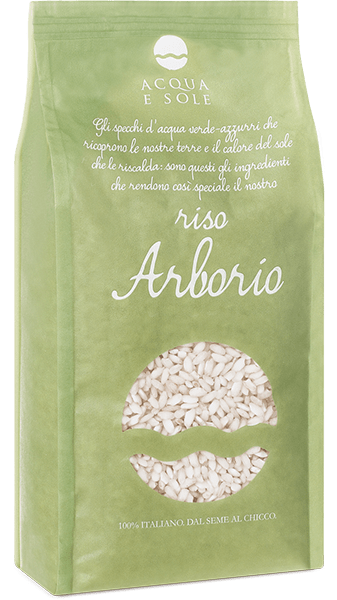
Acqua e Sole Arborio Rice
Our classic variety for pilaf, cold salads, rice pudding and suppli. A large grain, soft cooking in sixteen to eighteen minutes, a generous surface starch that binds the dish without making it sticky. Grown at Lumellogno, dried at a low temperature in our drying plant, packed on site. A closed supply chain with ISO 9001 certified production, from seed to bag.
Take the Arborio homeOriginal Acqua e Sole recipe, from our kitchen in Lumellogno.