
Risotto alla Zucca
A classic of the autumn tradition of Northern Italy: golden pumpkin, butter, Parmigiano Reggiano DOP and our Arborio rice for an enveloping, creamy risotto. The recipe from the Acqua e Sole kitchen.
An autumn risotto from the Po Valley with our Acqua e Sole Arborio from Lumellogno, golden pumpkin peeled and cut into cubes, an onion soffritto (the slow-sweat aromatic base) in butter, the tostatura (the dry-toast of the rice) and deglazing with dry white wine, cooking with ladles of hot vegetable stock for about 15 minutes, a final mantecatura (the off-heat creamy stir) with cold butter and grated Parmigiano Reggiano DOP, then a covered rest of 5 minutes. It is served with a scattering of black pepper and a drizzle of raw extra virgin olive oil. The recipe from the Acqua e Sole kitchen, from the Po Valley tradition of Lumellogno.
When here at Lumellogno the mornings of low mist settle over the fields and the pumpkins begin to appear on the stalls of the Novara market, the rhythm in the kitchen changes. The herb risotto of spring and the summer risottos with tomatoes and vegetables from the garden give way to a warmer, denser dish, made with what the Po Valley offers in its yellow months. Pumpkin risotto is our autumn recipe par excellence, a culinary tradition that runs across Lombardy, Piedmont and Veneto, always with small variations from house to house, but always with the same soul.
For our own version we choose the Arborio rice from our closed supply chain at Lumellogno, the western hamlet of Novara, ISO 9001 certified. Arborio is the variety we prefer for pumpkin risotto because the rounder grain and the generous surface starch melt together with the soft flesh of the pumpkin into an enveloping, golden cream that is the signature of this dish. Butter, onion, Parmigiano Reggiano DOP grated to order and a drizzle of raw extra virgin olive oil: not a single ingredient out of place, only what the Po Valley tradition has kept on the table for generations.
Ingredients for 4 People
Ingredients
- 320 g Acqua e Sole Arborio rice
- 500 g peeled pumpkin
- ½ onion
- 60 ml dry white wine
- 1,5 l vegetable stock
- 80 g grated parmesan
- 80 g butter
- q.b. extra virgin olive oil
- q.b. black pepper, salt
Notes from Our Kitchen
- Choose a pumpkin with firm, dry flesh: the Cappello del Prete or the Marina di Chioggia are ideal
- The Mantua pumpkin is perfect for its delicate sweetness and floury texture
- The stock must always be kept thoroughly hot: add it one ladle at a time
- For a richer version, add a few sage leaves fried in butter as a garnish
- Always let the risotto rest, covered, for 5 minutes before serving
Method
Prepare the Pumpkin
We begin with the pumpkin. Once the skin is removed, we cut it into even cubes of about 1 cm a side, so that during cooking they keep a uniform shape and break down at the right pace. Meanwhile we put a small pan of vegetable stock on the heat: it must stay thoroughly hot for the whole cooking, always ready at the side of the pan. This is the first gesture we make in our own kitchen too, here on the Novara plain, when the pumpkin season arrives and the larder fills with the colours of autumn.
The Soffritto and the Pumpkin
In a wide pan we melt 50 g of butter and stir in the finely chopped onion. When it takes on that golden colour we like, we add the pumpkin cubes and let them sweat for about fifteen minutes, stirring now and then. If we see it drying out too much, we moisten it with a ladle of hot stock. The pumpkin should soften slowly and begin to break down at the edges, yet stay recognisable.
Toast the Rice
Separately, in another pan, we warm a drizzle of extra virgin olive oil and tip in the Arborio. This is the moment of the tostatura (the dry-toast of the rice), a step we never skip: a lively flame, stirring constantly for a couple of minutes, until the grains turn glossy and almost translucent. At that point we deglaze with the white wine and keep stirring until the alcohol has dissolved completely. This is how the grain seals itself, and in cooking it holds up better. Our Arborio, grown in the paddies around Lumellogno, answers this gesture as it should: it stays whole, it does not split open.
Cooking with the Stock
When the wine has evaporated, we transfer the toasted rice into the pumpkin pan and begin to pour in the hot stock, one ladle at a time. The rule is simple: you add the next ladle only when the previous one has been absorbed, stirring calmly. We carry on like this for about 15 minutes, until the grain reaches the right doneness, al dente but soft at the heart. It is a slow rhythm, the one we were taught at home and that we keep passing on: risotto is not made in a hurry, and in the Novara fields this patience is the same we put in from sowing to harvest.
Mantecatura and Rest
We turn off the heat and lift the pan off the burner. This is the moment of the mantecatura (the off-heat creamy stir), the one we always wait for with a little excitement: we add the cold butter that remains and the grated Parmigiano Reggiano, and stir vigorously for a few seconds, until we see that creaminess that binds everything without weighing it down. We adjust the salt, a fresh grind if needed. We cover with the lid and let it rest for 5 minutes: the rice relaxes, the flavours talk to one another. We bring it to the table finished with pepper ground on the spot and a few drops of raw EVO. This is the tradition we look after, dish after dish.
The Queen of the Po Valley Autumn
Here at Lumellogno, autumn shows in the fields before it shows on the calendar. When the rice has been harvested and our Novara fields return to rest, the stalls of the market fill with the large, heavy pumpkins that have made the Po Valley the home of this gentle vegetable. Lombardy, Piedmont, Veneto: three regions sharing the same rich, damp land between the Po and the Ticino, where the pumpkin has always been the undisputed queen of the autumn table. The Cappello del Prete of our parts, the Venetian Marina di Chioggia, the floury Mantua pumpkin that fills the tortelli: each area has its variety, each with the same sweet soul. In our home, when the first misty days arrive, it is time for pumpkin risotto with our Arborio. A simple recipe, made with what the plain has given us, always true to itself, always different by the hand of the one who prepares it.
Culinary tradition of the Po Valley · Lumellogno · Novara
Why Arborio for pumpkin risotto
On pumpkin risotto the debate between Arborio and Carnaroli comes up often, and in our home we have no doubts: Arborio is the right variety. The rounder, shorter grain compared with Carnaroli, the more generous surface starch, the more immediate creaminess: all of this serves to melt with the soft flesh of the pumpkin, which during cooking breaks down and becomes part of the cream. Carnaroli remains the prince on risottos where the grain must keep a defined structure, but with pumpkin Arborio wins, every time. We grow it at Lumellogno, the western hamlet of Novara, across our 350 hectares of paddy in a closed supply chain with ISO 9001 certified production. From the paddy to the bag everything happens on the farm, and it is this complete in-house processing that lets us bring to the table a grain with its surface starch intact, ready to make the creaminess of the autumn risotto just as it should be.
«Pumpkin risotto wants Arborio. The grain embraces the flesh, the butter binds without weighing things down, the Parmigiano Reggiano DOP closes the dish with just the right savouriness. That is how we make it in our home, as we always have.» From the Acqua e Sole kitchen, Lumellogno
One word of caution we feel bound to give: do not skip the final rest. Five minutes under the lid after the mantecatura are the moment when the starch finishes binding, the Parmigiano melts completely and the risotto finds its all’onda (wave-like, loose and flowing) consistency, the one that makes the dish. With pumpkin risotto, haste always costs you.
Questions about pumpkin risotto
Which variety of pumpkin should I use for the risotto?
Why Arborio and not Carnaroli?
Can it be made in advance?
Suggested Pairing
With pumpkin risotto we happily open a structured Piedmontese white, one that stands up to the sweetness of the pumpkin and the savouriness of the Parmigiano without being covered. With us a Erbaluce di Caluso DOCG Riserva is a favourite, a Canavese wine of good body and marked minerality, or a Timorasso Colli Tortonesi DOC from our southern borders, a white wine of great backbone that grows magnificently with the dish.
For those who prefer a red, we stay with light autumnal wines of the territory: a lively, fruity Bonarda dell’Oltrepò Pavese, a Grignolino d’Asti with its typical note of white pepper, or a young Freisa d’Asti served cool. Avoid the structured, tannic reds such as Barolo, Barbaresco or Amarone: they clash with the sweetness of the pumpkin and the velvet of the Parmigiano.
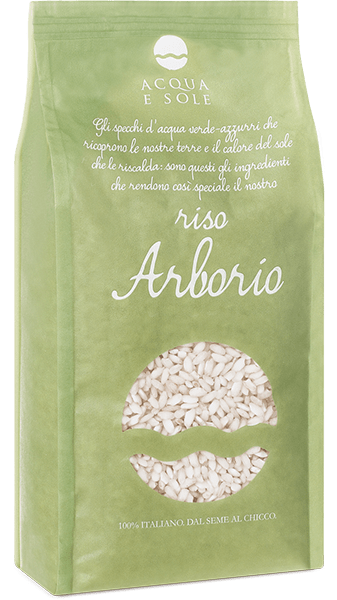
Acqua e Sole Arborio Rice
Our Arborio, grown at Lumellogno and worked in our rice mill. A round, short grain, generous surface starch, immediate creaminess that embraces the soft flesh of the pumpkin and melts with the butter and the Parmigiano. The right variety for the autumn risottos of the Po Valley tradition, where you need a golden velvet and a full mantecatura. A closed supply chain with ISO 9001 certified production, low-temperature drying to preserve the surface starch.
Bring Arborio homeA traditional recipe of the Po Valley, from our kitchen at Lumellogno.